




About
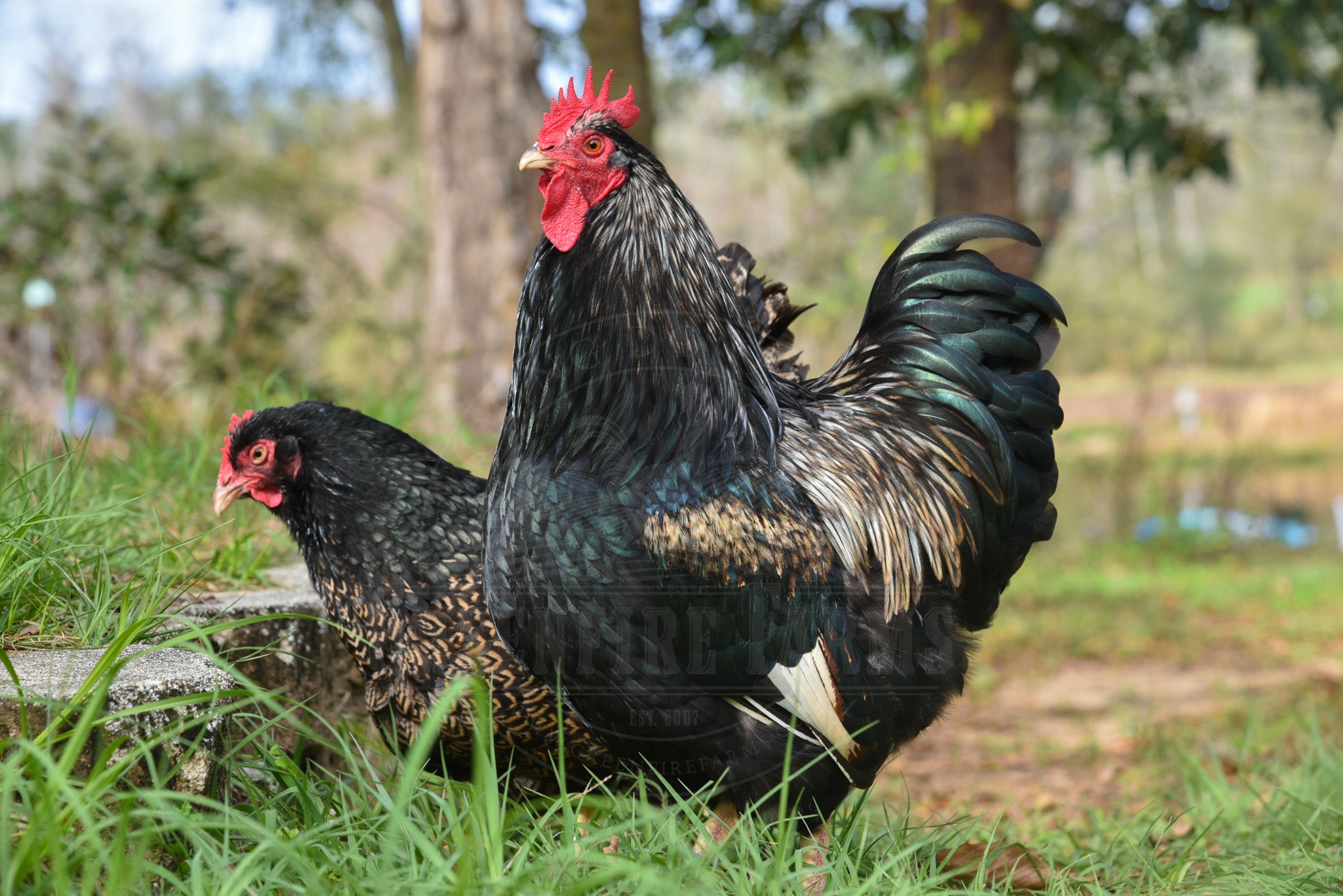
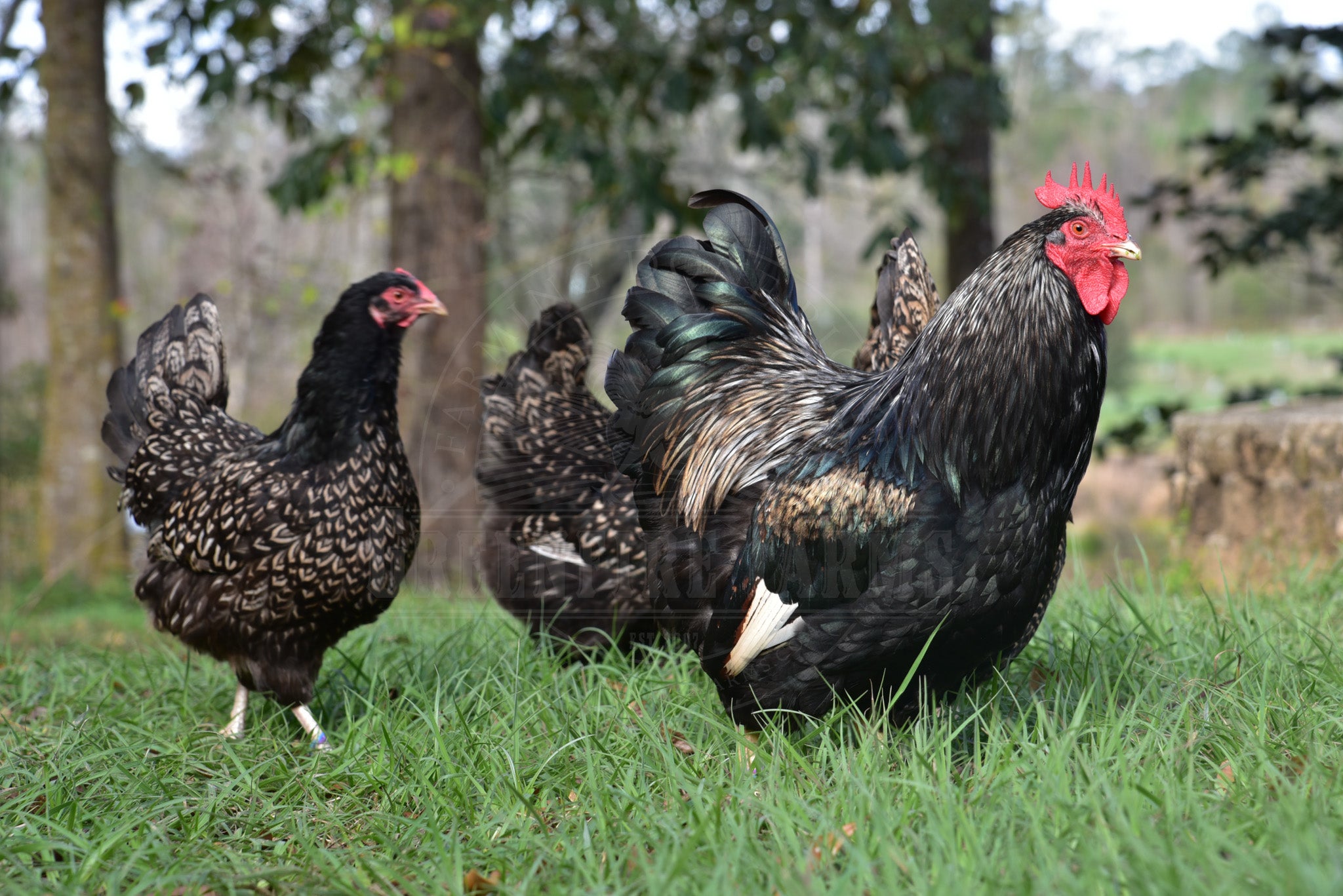
The Barnevelder, developed in Holland nearly 200 years ago, arose from crossing imported Asian “Shanghai” chickens—early ancestors of breeds like the Brahma, Cochin, and particularly the Langshan—with local Dutch fowl, resulting in a hardy, dual-purpose bird known for its rich brown eggs and strong winter laying. Originally bred to meet Europe’s demand for high-quality brown eggs, the Barnevelder has since expanded into more than a dozen varieties, with the stunning double-laced feather pattern becoming its most iconic feature. Imported into the U.S. in the 1920s, the breed is now a favorite among backyard keepers for its calm temperament, reliable production of 180–200 tan eggs per year, and substantial size—roosters reaching 7–8 pounds and hens 6–7 pounds. Though moderately active, they tolerate confinement well and may slow down in summer heat, making them well suited to medium-sized coops and runs.
Breed History
Appearance and Behavior
Breed Standard
Hatching Eggs
Breed defects or issues
Notes
Breed Availability
Silver Laced Barnevelder
Breed History
Appearance and Behavior
Breed Standard
Hatching Eggs
Breed defects or issues
Notes
More Detail


About
The Barnevelder, developed in Holland nearly 200 years ago, arose from crossing imported Asian “Shanghai” chickens—early ancestors of breeds like the Brahma, Cochin, and particularly the Langshan—with local Dutch fowl, resulting in a hardy, dual-purpose bird known for its rich brown eggs and strong winter laying. Originally bred to meet Europe’s demand for high-quality brown eggs, the Barnevelder has since expanded into more than a dozen varieties, with the stunning double-laced feather pattern becoming its most iconic feature. Imported into the U.S. in the 1920s, the breed is now a favorite among backyard keepers for its calm temperament, reliable production of 180–200 tan eggs per year, and substantial size—roosters reaching 7–8 pounds and hens 6–7 pounds. Though moderately active, they tolerate confinement well and may slow down in summer heat, making them well suited to medium-sized coops and runs.
Breed History
Appearance and Behavior
Breed Standard
Hatching Eggs
Breed defects or issues
Notes
Breed Availability