


About
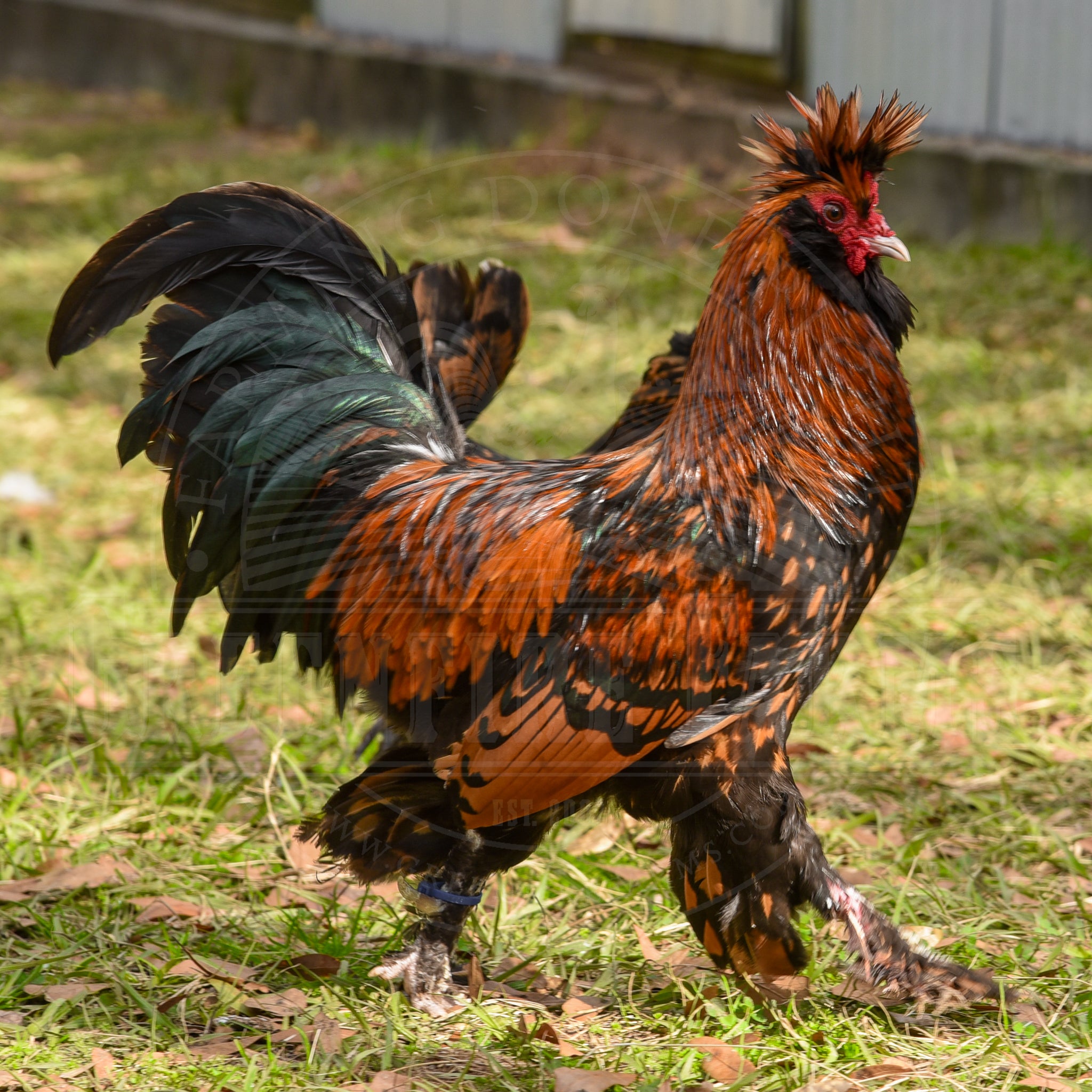
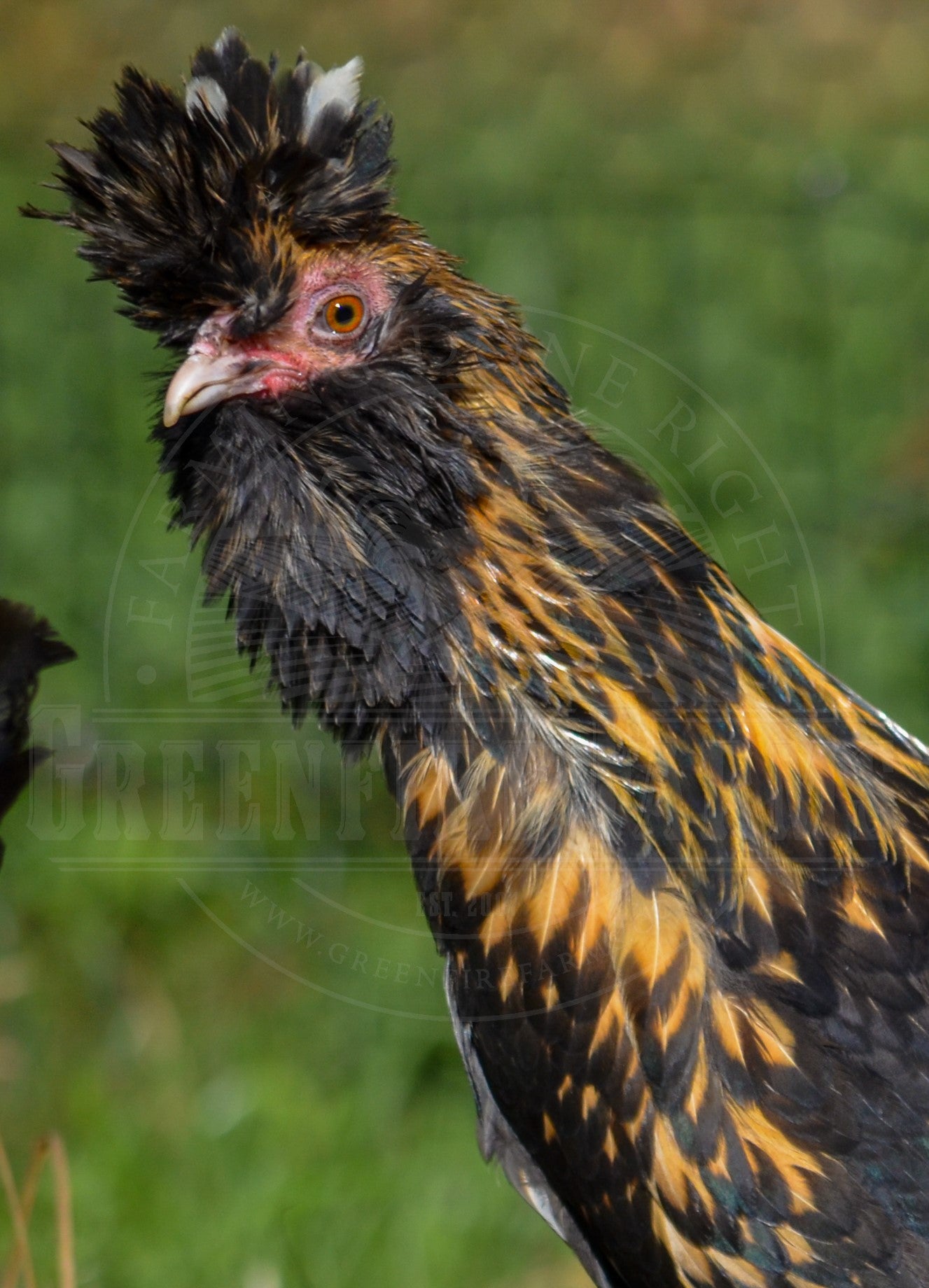
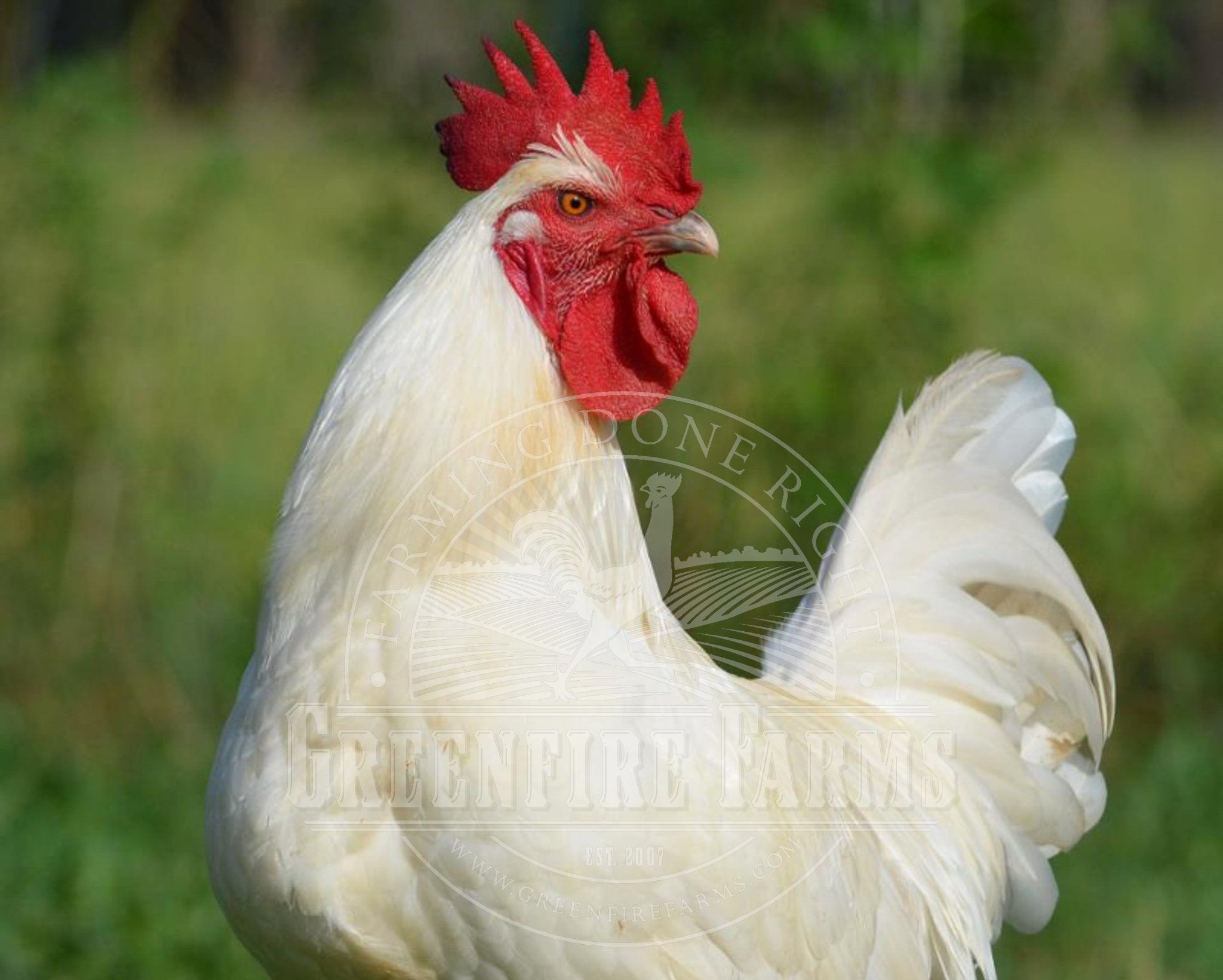
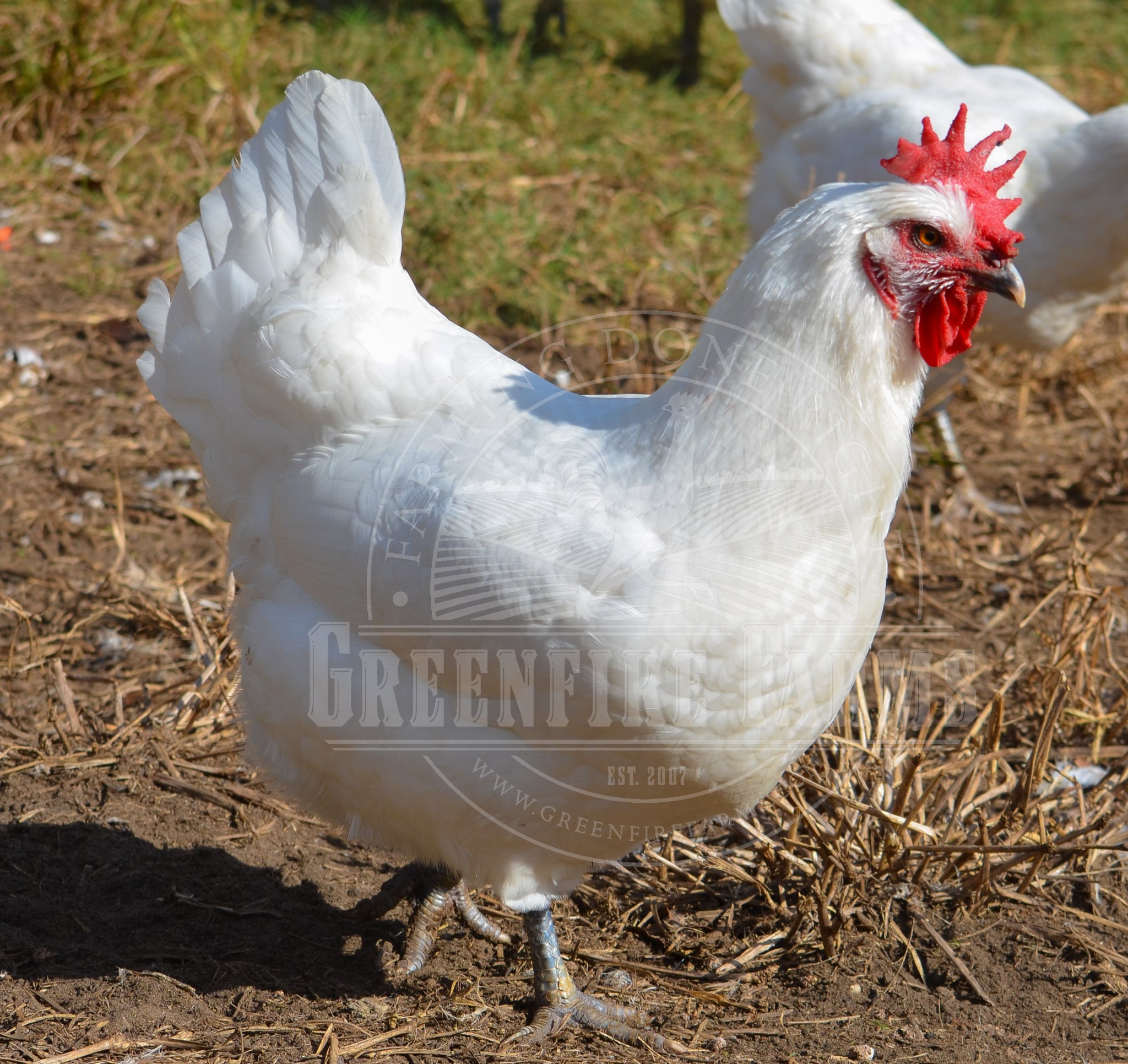
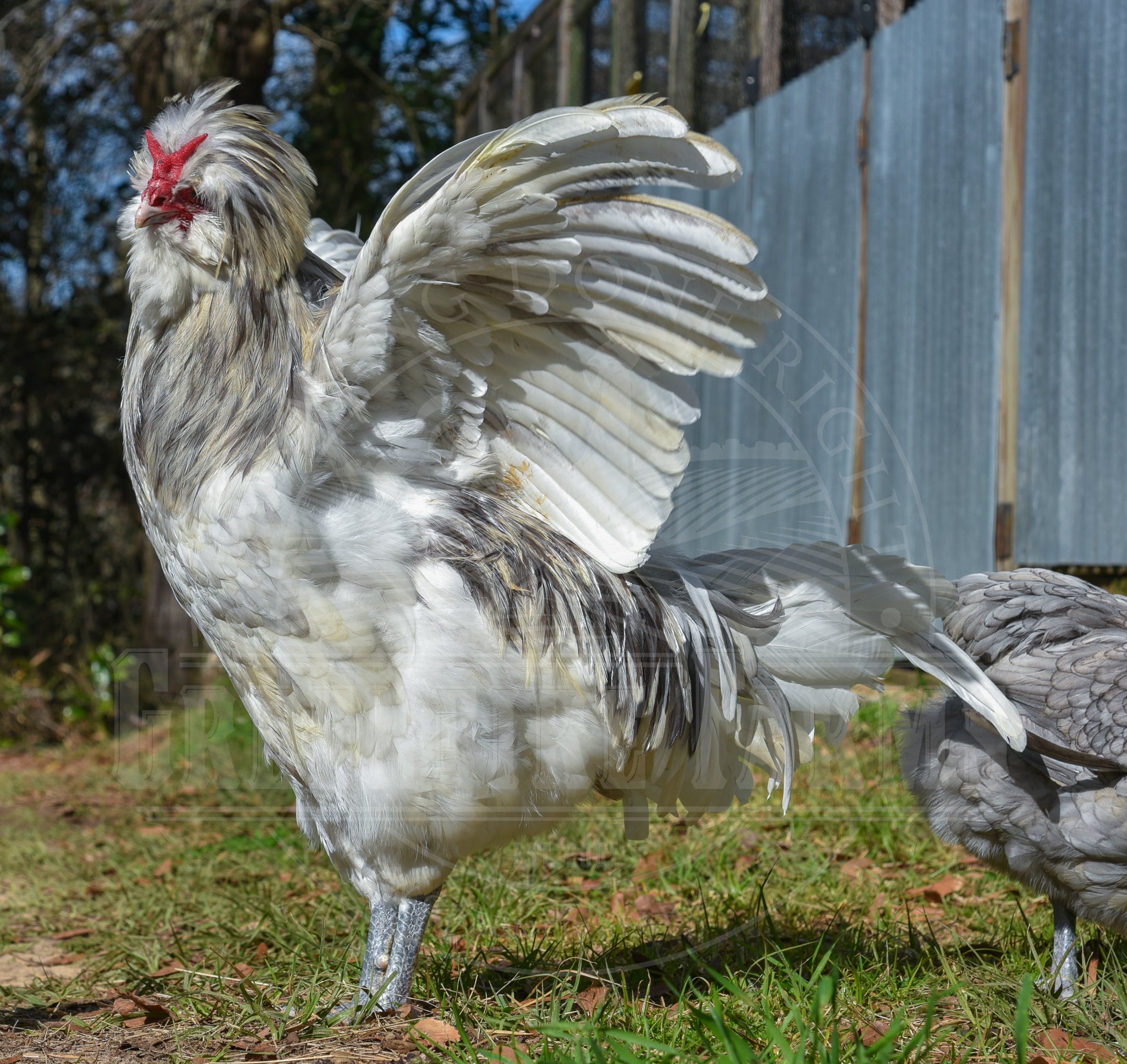
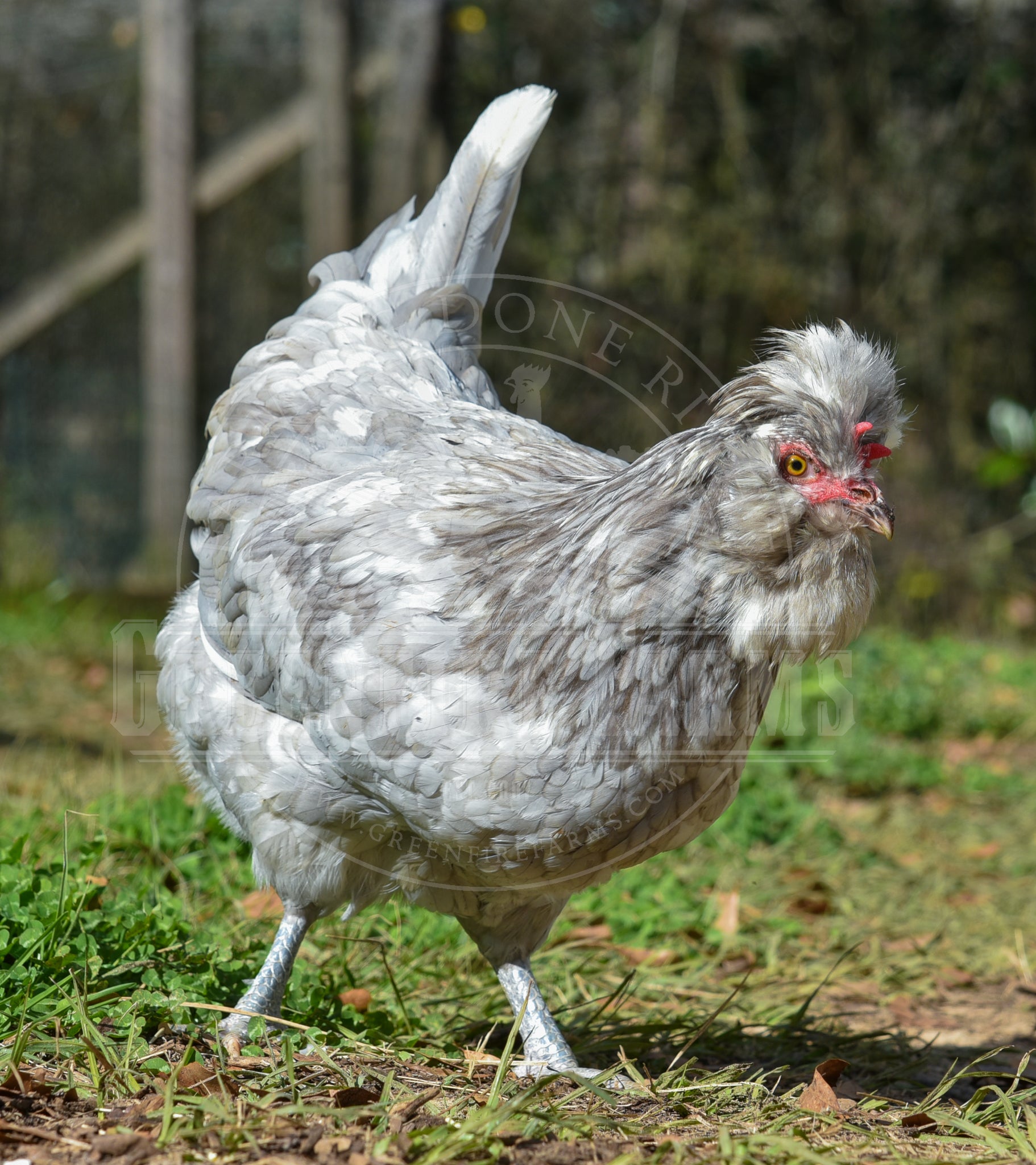
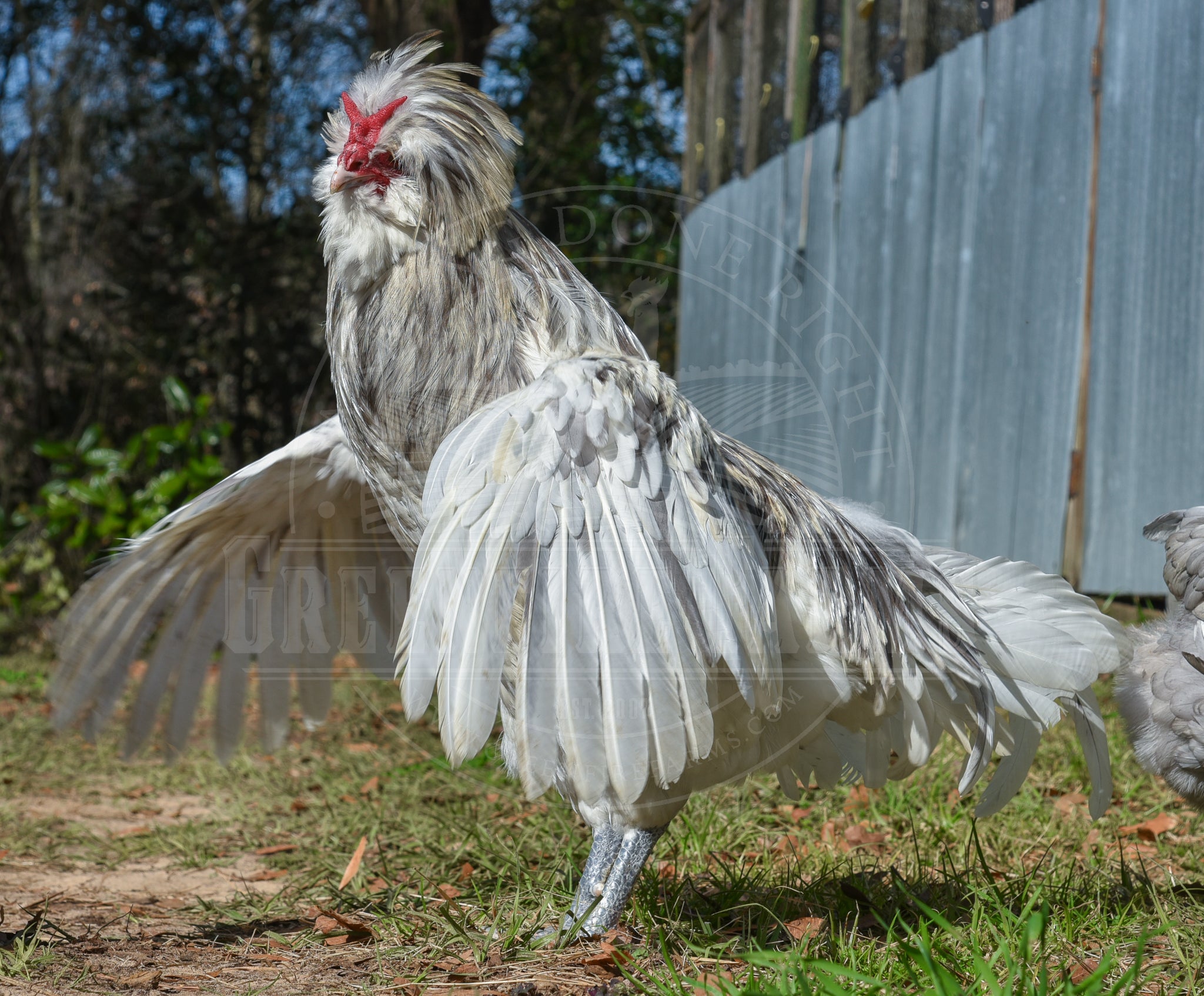
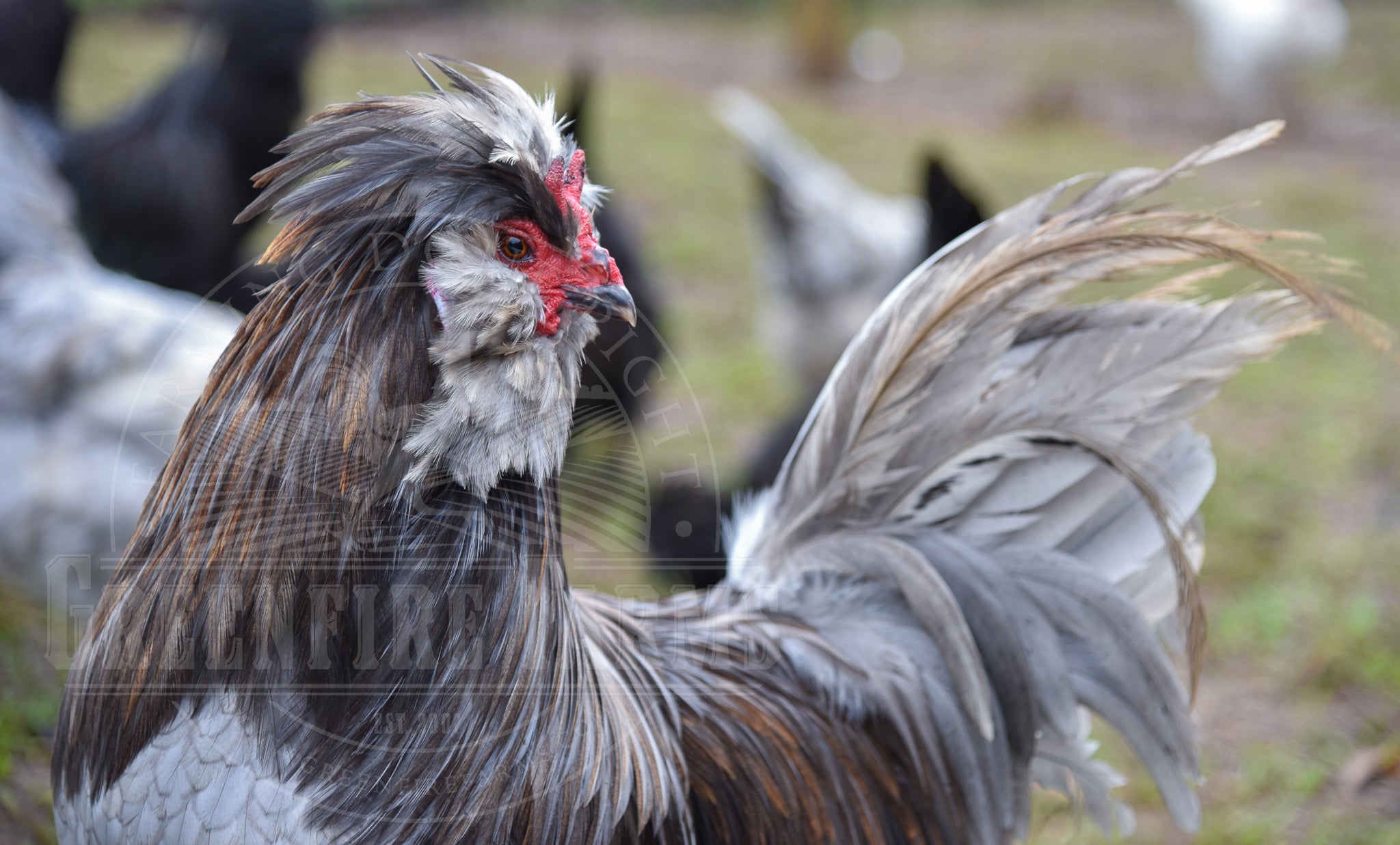
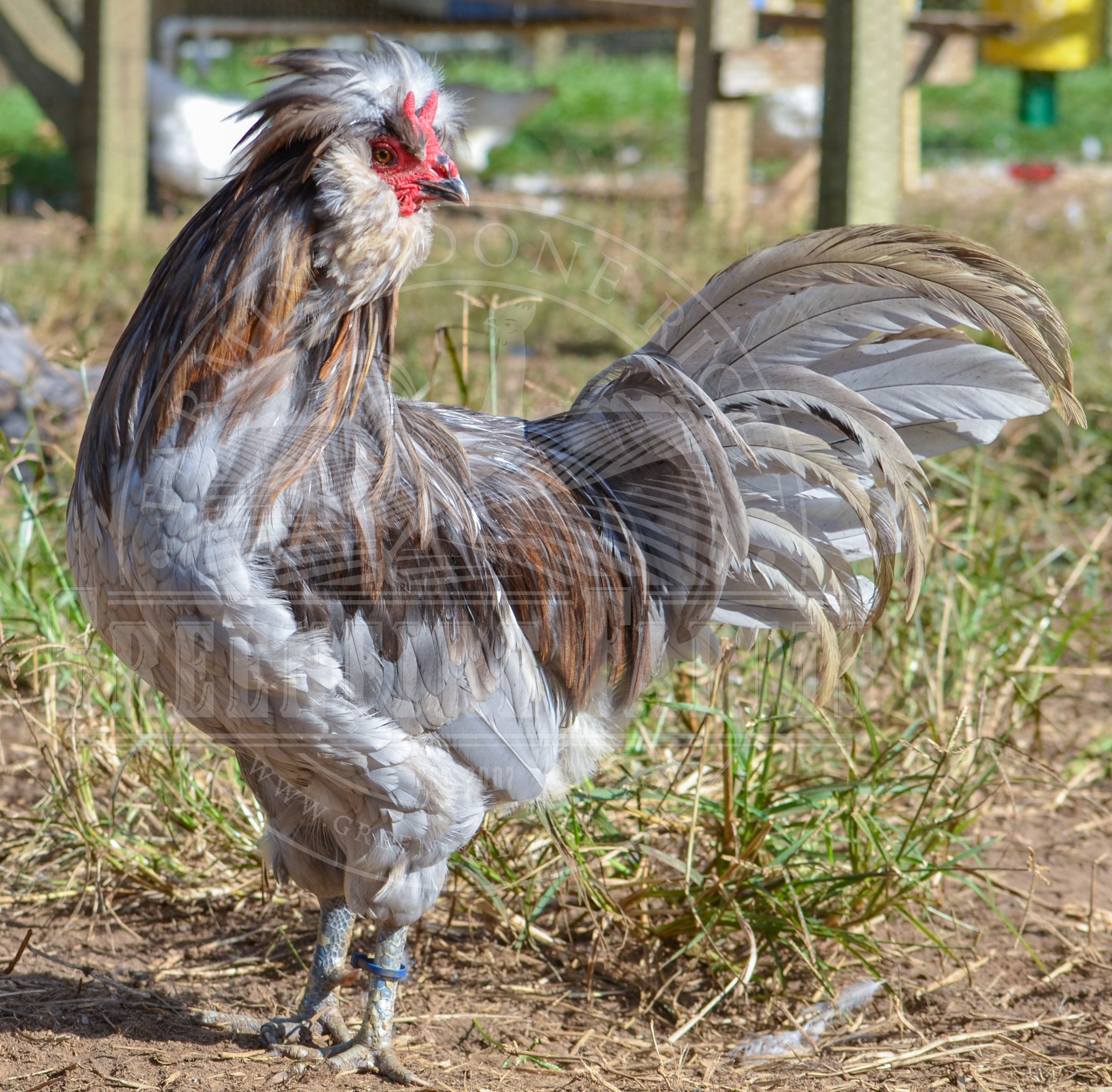
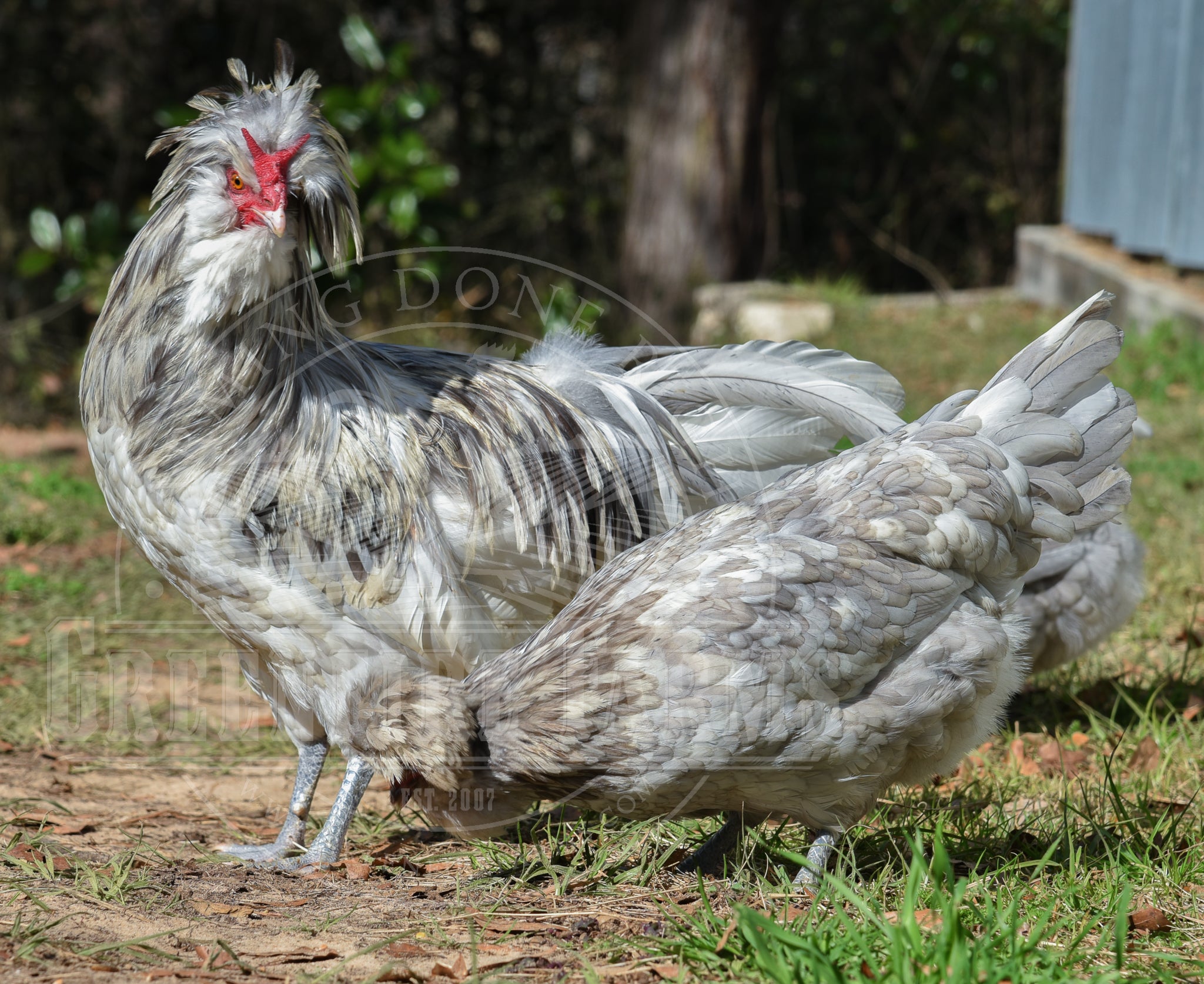
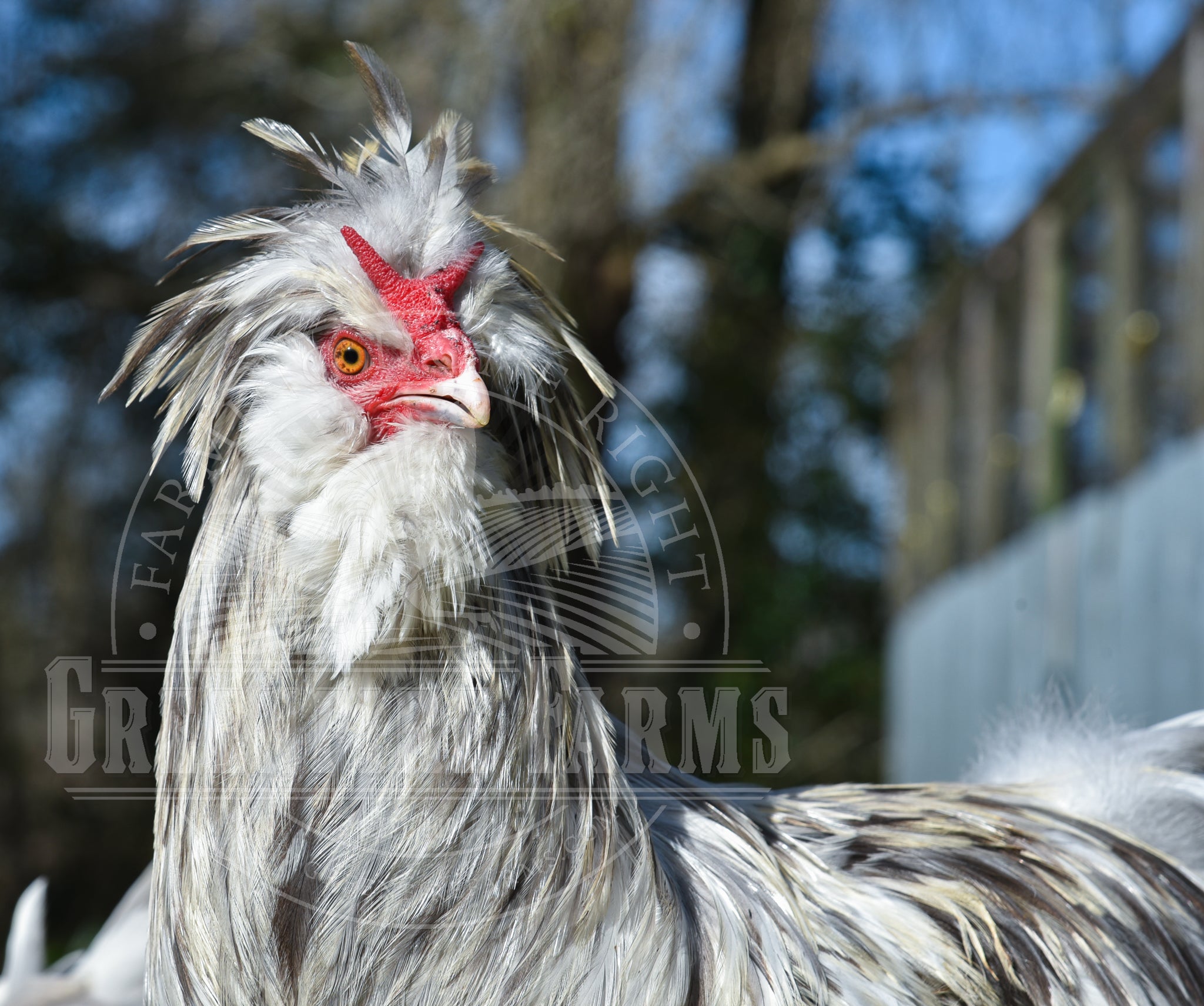
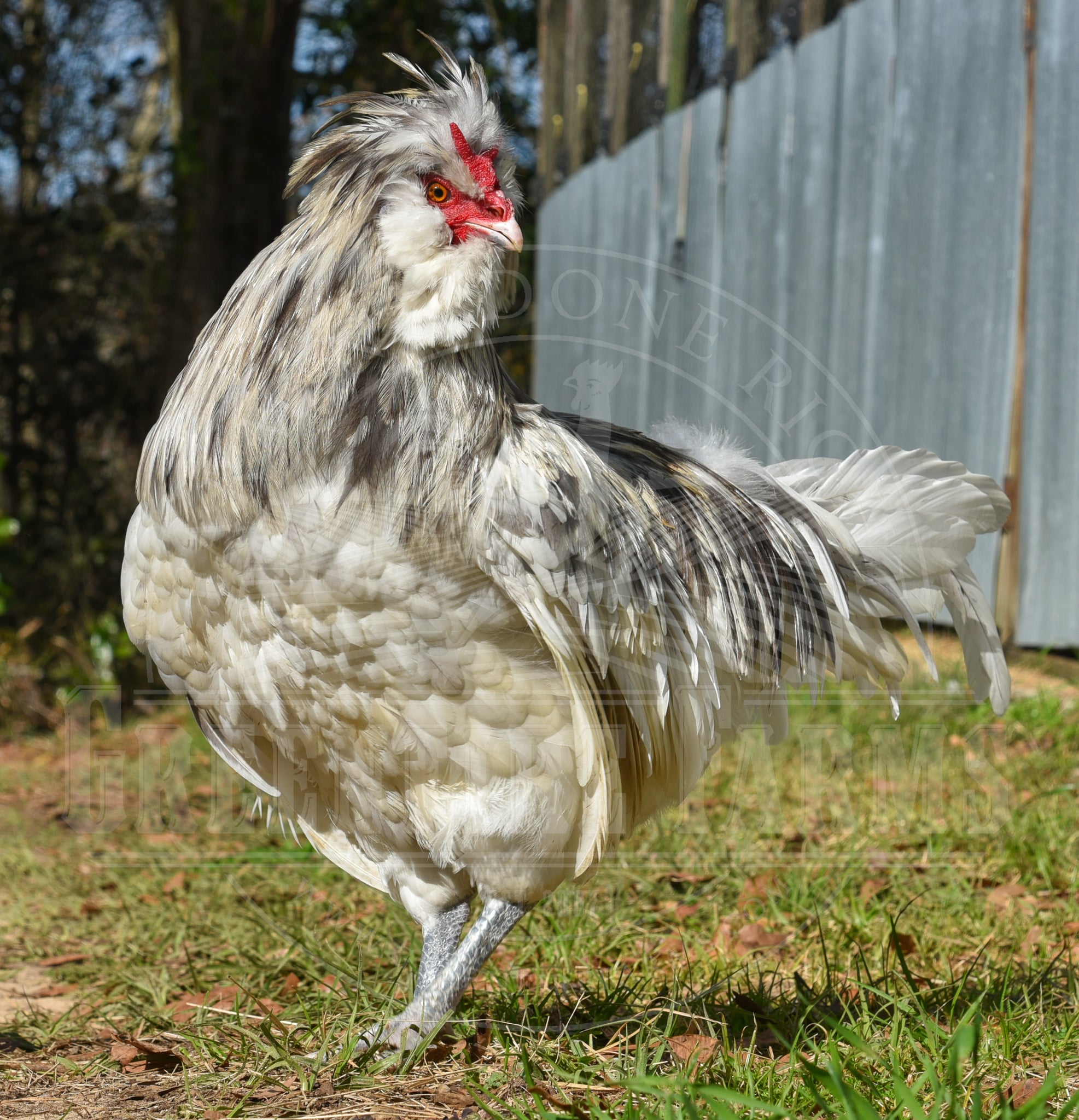
Although the breed’s French name literally translates as “broken heart,” you will have anything but if you’re lucky enough to raise this ancient fowl. “Creves” as they are affectionately known originated near Normandy many hundreds of years ago and arrived in the United States probably in the 1800s. On a practical level they’re known for the tastiness of their delicate flesh, but on an aesthetic level what is far more obvious are their beards and their unique horn-like combs.
We have been told by a Creve expert that it has been more than a century since new bloodlines of this rare breed have arrived from France, but in 2017 Greenfire Farms imported Creves from one of the top exhibition-breeders in their native country. We imported both black and blue Creves, and the colors and personalities of the birds are quite attractive and endearing. As of 2024 we will be focusing on the blue and white varieties only since the conservation status of the black variety was downgraded from Critical to Watch by the Livestock Conservancy.
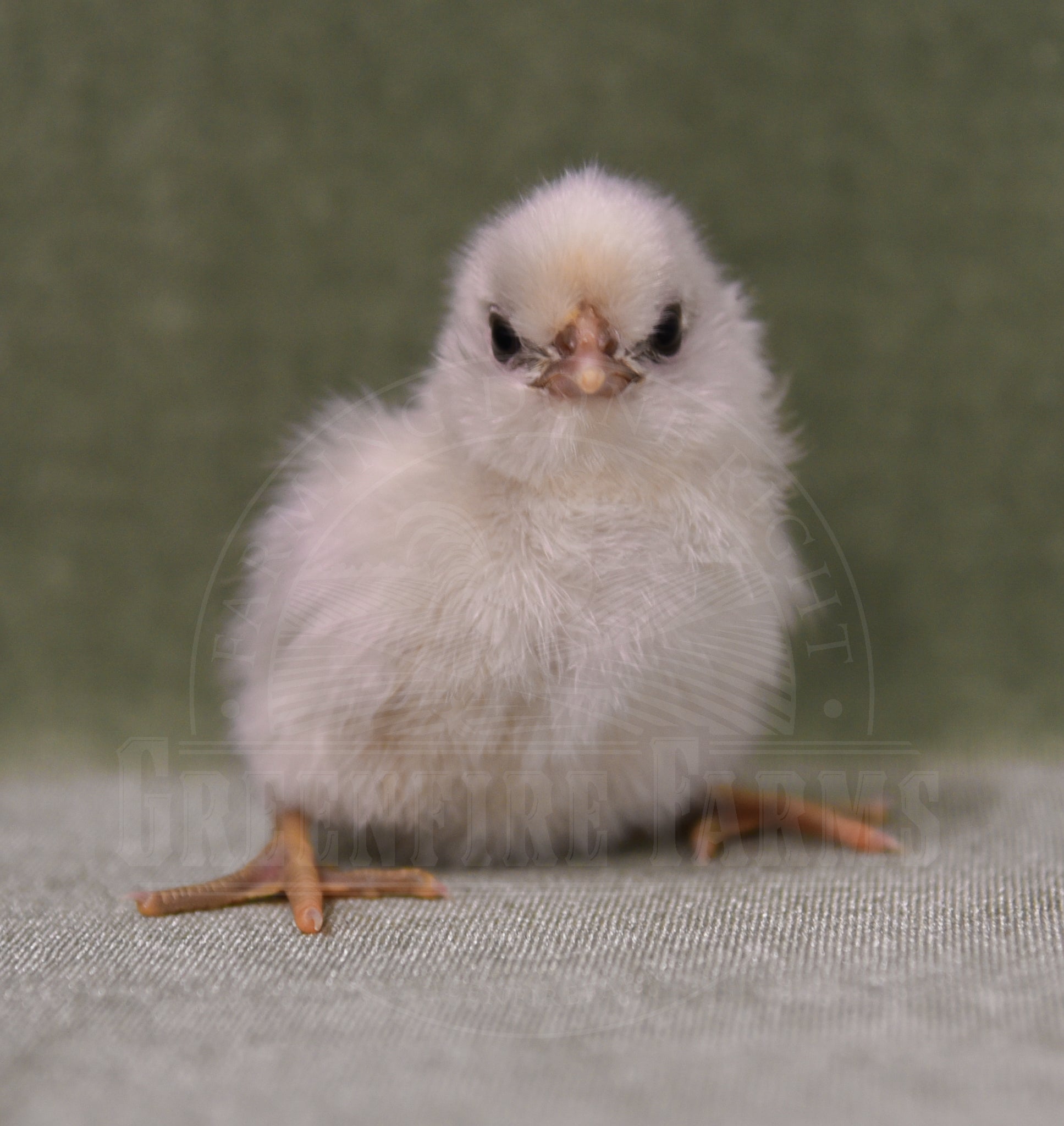
Weirdly, the written American standard for this breed specifies a red earlobe while in France it is well established that the preferred color is whitish or a color that loosely translates as “mother-of-pearl blue.” Our birds follow the French standard. Occasionally we’ll hatch a chick that doesn’t have the requisite feather beard, but these are infrequently encountered and shouldn’t be a problem to address with a structured breeding program. At any rate, our import from a champion bloodline offers Americans the opportunity to encounter for the authentic French Crevecoeur, a beautiful breed.
You can find more about this breed here - https://www.poules-racesdefrance.fr/wp-content/uploads/2017/03/20_CREVE-COEUR.pdf/
Breed History
Appearance and Behavior
Breed Standard
Hatching Eggs
Breed defects or issues
Notes
Breed Availability
Crevecoeur
Breed History
Appearance and Behavior
Breed Standard
Hatching Eggs
Breed defects or issues
Notes
More Details


About
Although the breed’s French name literally translates as “broken heart,” you will have anything but if you’re lucky enough to raise this ancient fowl. “Creves” as they are affectionately known originated near Normandy many hundreds of years ago and arrived in the United States probably in the 1800s. On a practical level they’re known for the tastiness of their delicate flesh, but on an aesthetic level what is far more obvious are their beards and their unique horn-like combs.
We have been told by a Creve expert that it has been more than a century since new bloodlines of this rare breed have arrived from France, but in 2017 Greenfire Farms imported Creves from one of the top exhibition-breeders in their native country. We imported both black and blue Creves, and the colors and personalities of the birds are quite attractive and endearing. As of 2024 we will be focusing on the blue and white varieties only since the conservation status of the black variety was downgraded from Critical to Watch by the Livestock Conservancy.
Weirdly, the written American standard for this breed specifies a red earlobe while in France it is well established that the preferred color is whitish or a color that loosely translates as “mother-of-pearl blue.” Our birds follow the French standard. Occasionally we’ll hatch a chick that doesn’t have the requisite feather beard, but these are infrequently encountered and shouldn’t be a problem to address with a structured breeding program. At any rate, our import from a champion bloodline offers Americans the opportunity to encounter for the authentic French Crevecoeur, a beautiful breed.
You can find more about this breed here - https://www.poules-racesdefrance.fr/wp-content/uploads/2017/03/20_CREVE-COEUR.pdf/
Breed History
Appearance and Behavior
Breed Standard
Hatching Eggs
Breed defects or issues
Notes
Breed Availability
You may also like